Invega Prices Coupons Savings Tips Goodrx

For patients with mild to moderate hepatic impairment, (child-pugh classification a and b), no dose adjustment is recommended [see clinical pharmacology (12. 3)]. invega® has not been studied in patients with severe hepatic impairment. Nov 25, 2018 invega belongs to the class of medications known as atypical antipsychotics according to goodrx. com, 30 tablets of 6mg invega cost approximately $1,000. thirty tablets of 6mg generic paliperidone cost invega 6 mg goodrx approximately $8.
Medicare coverage and pricing details for paliperidone er. learn more about medicare prescription drug plans and savings with goodrx. In the qt study (n=141), the 8 mg dose of immediate-release oral paliperidone (n=50) showed a mean placebo-subtracted increase from baseline in qtcld of 12. 3 msec (90% ci: 8. 9; 15. 6) on day 8 at 1. 5 hours post-dose. the mean steady-state peak plasma concentration for this 8 mg dose of paliperidone immediate-release was more than twice the exposure observed with the maximum recommended 12 mg dose of invega® (cmax ss = 113 ng/ml and 45 ng/ml, respectively, when administered with a standard breakfast). in this same study, a 4 mg dose of the immediate-release oral formulation of paliperidone, for which cmax ss = 35 ng/ml, showed an increased placebo-subtracted qtcld of 6. 8 msec (90% ci: 3. 6; 10. 1) on day 2 at 1. 5 hours post-dose. none of the subjects had a change exceeding 60 msec or a qtcld exceeding 500 msec at any time during this study.
Jun 27, 2018 warfarin sod 6mg tab $29. 99. price. cialis 2. 5mg tab. 6. $74. 99. cialis 5mg tab. 6 invega sustenna 117mg/0. 75ml inj. The effects of paliperidone on the qt interval were evaluated in a double-blind, active-controlled (moxifloxacin 400 mg single dose), multicenter qt study in adults with schizophrenia and schizoaffective disorder, and in three placeboand active-controlled 6-week, fixed-dose efficacy trials in adults with schizophrenia.

Invega Fda Prescribing Information Side Effects And Uses
Generic name & formulations: paliperidone 1. 5mg, 3mg, 6mg, 9mg; ext-rel tabs. company: janssen pharmaceuticals, . The recommended dose of invega® (paliperidone) extended-release tablets for the treatment of schizophrenia in adults is 6 mg administered once daily. initial dose titration is not required. although it has not been systematically established that doses above 6 mg have additional benefit, there was a general trend for greater effects with higher doses. this must be weighed against the dose-related increase in adverse reactions. thus, some patients may benefit from higher doses, up to 12 mg/day, and for some patients, a lower dose of 3 mg/day may be sufficient. dose increases above 6 mg/day should be made only after clinical reassessment and generally should occur at intervals of more than 5 days. when dose increases are indicated, increments of 3 mg/day are recommended. the maximum recommended dose is 12 mg/day. the recommended starting dose of invega® (paliperidone) extended-release tablets for the treatment of schizophrenia in adolescents 1217 years of age is 3 mg administered once daily. initial dose titration is not required. dose increases, if considered necessary, should be made only after clinical reassessment and should occur at increments of 3 mg/day at intervals of more than 5 days. prescribers should be mindful that, in the adolescent schizophrenia study, there was no clear enhancement to efficacy at the higher doses, i. e. 6 mg for subjects weighing less than 51 kg and 12 mg for subjects weighing 51 kg or greater, while adverse events were dose-related. the recommended dose of invega® (paliperidone) extended-release tablets for the treatment of schizoaffective disorder in adults is 6 mg administered once daily. initial dose titration is not required. some patients may benefit from lower or higher doses within the recommended dose range of 3 to 12 mg once daily. a general trend for greater effects was seen with higher doses. this trend must be weighed against dose-related increase in adverse reactions. dosage adjustment, if indicated, should occur only after clinical reassessment. dose increases, if indicated, generally should occur at intervals of more than 4 days. when dose increases are indicated, increments of 3 mg/day are recommended. the maximum recommended dose is 12 mg/day. dosing must be individualized according to the patient's renal function status. for patients with mild renal impairment (creatinine clearance 50 ml/min to < 80 ml/min), the recommended initial dose of invega® is 3 mg once daily. the dose may then be increased to a maximum of 6 mg once daily based on clinical response and tolerability. for patients with moderate to severe renal impairment (creatinine clearance 10 ml/min to < 50 ml/min), the recommended initial dose of invega® is 1. 5 mg once daily, which may be increased to a maximum of 3 mg once daily after clinical reassessment. as invega® has not been studied in patients with creatinine clearance below 10 ml/min, use is not recommended in such patients. [see clinical pharmacology (12. 3)].
Undesirable alterations in lipids have been observed in patients treated with atypical antipsychotics. Elderly patients with dementia-related psychosis treated with antipsychotic drugs are at an increased risk of death. analyses of 17 placebo-controlled trials (modal duration of 10 weeks), largely in patients taking atypical antipsychotic drugs, revealed a risk of death in drug-treated patients of between 1. 6 to 1. 7 times the risk of death in placebo-treated patients. over the course of a typical 10-week controlled trial, the rate of death in drug-treated patients was about 4. 5%, compared to a rate of about 2. 6% in the placebo group. although the causes of death were varied, most of the deaths appeared to be either cardiovascular (e. g. heart failure, sudden death) or infectious (e. g. pneumonia) in nature. observational studies suggest that, similar to atypical antipsychotic drugs, treatment with conventional antipsychotic drugs may increase mortality. the extent to which the findings of increased mortality in observational studies may be attributed to the antipsychotic drug as opposed to some characteristic(s) of the patients is not clear. invega® (paliperidone) is not approved for the treatment of dementia-related psychosis [see boxed warning]. a syndrome of potentially irreversible, involuntary, dyskinetic movements may develop in patients treated with antipsychotic drugs. although the prevalence of the syndrome appears to be highest among the elderly, especially elderly women, it is impossible to predict which patients will develop the syndrome. whether antipsychotic drug products differ in their potential to cause tardive dyskinesia is unknown. the risk of developing tardive dyskinesia and the likelihood that it will become irreversible appear to increase as the duration of treatment and the total cumulative dose of antipsychotic drugs administered to the patient increase, but the syndrome can develop after relatively brief treatment periods at low doses, although this is uncommon. the syndrome may remit, partially or completely, if antipsychotic treatment is withdrawn. antipsychotic treatment itself may suppress (or partially suppress) the signs and symptoms of the syndrome and may thus mask the underlying process. the effect of symptomatic suppression on the long-term course of the syndrome is unknown.
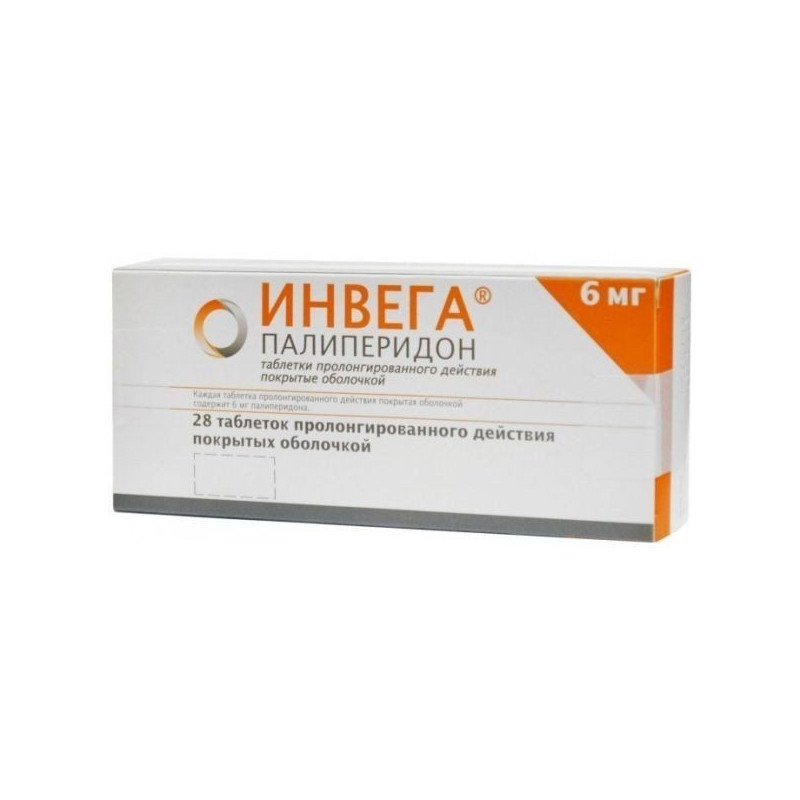
See invega 6 mg goodrx full list on drugs. com. In a longer-term study, invega® has been shown to be effective in delaying time to relapse in patients with schizophrenia who were stabilized on invega® for 6 weeks [see clinical studies (14)]. invega® should be prescribed at the lowest effective dose for maintaining clinical stability and the physician should periodically reevaluate the long-term usefulness of the drug in individual patients. Invega® must be swallowed whole with the aid of liquids. tablets should not be chewed, divided, or crushed. the medication is contained within a nonabsorbable shell designed to release the drug at a controlled rate. the tablet shell, along with insoluble core components, is eliminated from the body; patients should not be concerned if they occasionally notice in their stool something that looks like a tablet. See full list on drugs. com.
Invega Side Effects Uses And Dosage Drugs Com

Cariprazine coupon cariprazine 1. 5mg capsule. cariprazine. vraylar. cariprazine is an antipsychotic. it is used to treat schizophrenia or bipolar disorder. Invega® extended-release tablets are available in the following strengths and colors: 1. 5 mg (orange-brown), 3 mg (white), 6 mg (beige), and 9 mg (pink). all tablets are capsule shaped and are imprinted with either \\"pal 1. 5\\", \\"pal 3\\", \\"pal 6\\", or \\"pal 9\\". Concomitant use of invega® with risperidone has not been studied. since paliperidone is the major active metabolite of risperidone, consideration should be given to the additive paliperidone exposure if risperidone is coadministered with invega®. For the three fixed-dose efficacy studies in subjects with schizophrenia, electrocardiogram (ecg) measurements taken at various time points showed only one subject in the invega® 12 mg group had a change exceeding 60 msec at one time-point on day 6 (increase of 62 msec). no subject receiving invega® had a qtcld exceeding 500 msec at any time in any of these three studies.
Paliperidone is used to treat schizophrenia and schizoaffective disorder. the lowest goodrx price for the most common version of generic invega is around $113. 30, 86% off the average retail price of $855. 24. prescription settings. generic. tablet. 6mg. The management of nms should include: (1) immediate discontinuation of antipsychotic drugs and other drugs not essential to concurrent therapy; (2) intensive symptomatic treatment and medical monitoring; and (3) treatment of any concomitant serious medical problems for which specific treatments are available. there is no general agreement about specific pharmacological treatment regimens for uncomplicated nms. Dec 19, 2019 · invega ® (paliperidone) extended-release tablets are indicated for the treatment of schizoaffective disorder as monotherapy and as an adjunct to mood invega 6 mg goodrx stabilizers and/or antidepressant therapy in adults and for the treatment of schizophrenia in adults. The recommended dose of invega ® (paliperidone) extended-release tablets for the treatment of schizoaffective disorder in adults is 6 mg administered once daily. initial dose titration is not required. some patients may benefit from lower or higher doses within the recommended dose range of 3 to 12 mg once daily.
Invega fda prescribing information, side effects and uses.


0 comments:
Posting Komentar